

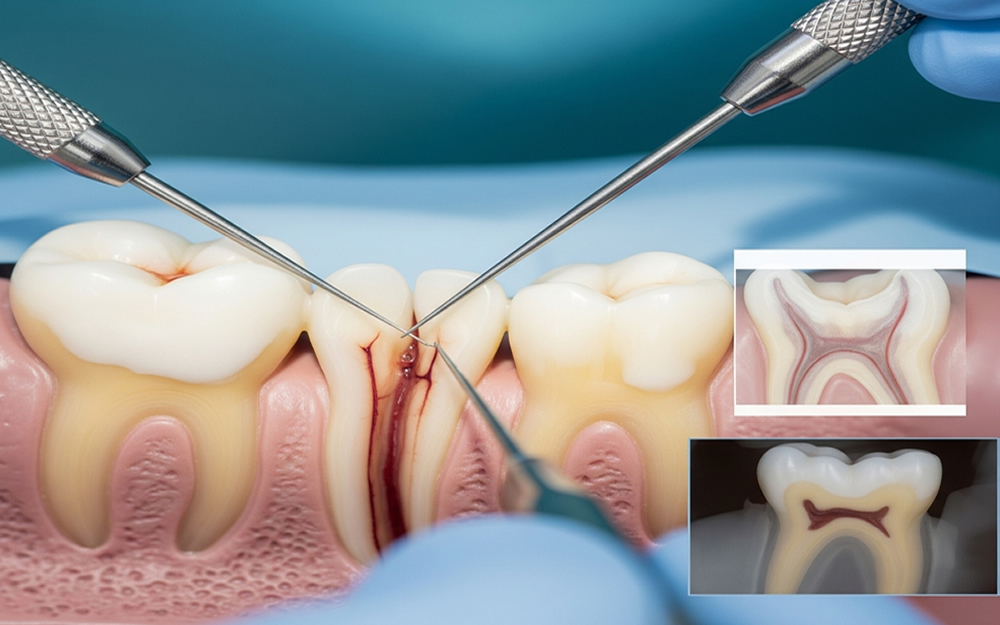
When people hear the words “root canal,” they often feel nervous. Many believe it is extremely painful. But the reality is very different. In modern dentistry, root canal treatment is a safe and comfortable procedure that actually helps remove pain rather than cause it.
In this complete guide, you will clearly understand what is root canal treatment and is it painful, along with its procedure, benefits, recovery, and everything you need to know in simple words.
What Is Root Canal Treatment?
Root canal treatment is a dental procedure used to treat infection inside a tooth. Inside every tooth, there is a soft tissue called the pulp. This pulp contains nerves and blood vessels that keep the tooth alive.
When bacteria enter the tooth due to deep decay, cracks, or injury, the pulp becomes infected. This infection can cause severe pain and swelling.
Root canal treatment removes the infected pulp, cleans the inside of the tooth, and seals it to prevent further infection. Instead of removing the entire tooth, this procedure allows you to keep your natural tooth for many years.
In simple terms, a root canal is like “cleaning and repairing” a damaged tooth from the inside.
Why Do You Need a Root Canal?
There are several reasons why a person may need root canal treatment. The most common causes are related to damage or infection inside the tooth.
Common Causes
- Deep tooth decay that reaches the pulp
- Cracked or broken teeth
- Injury or trauma to the tooth
- Repeated dental procedures on the same tooth
If the infection is not treated on time, it can spread to surrounding areas and lead to more serious dental problems. This is why early treatment is very important.
Signs You May Need Root Canal Treatment
Your body often gives warning signs when something is wrong with your tooth. Recognizing these symptoms early can help you avoid severe pain later.
Common Symptoms
- Continuous or severe toothache
- Sensitivity to hot or cold that lasts long
- Swollen or tender gums
- Darkening of the tooth
- Pimples or pus near the gums
If you notice these symptoms, it is important to visit a dentist as soon as possible.
Understanding Tooth Anatomy (Easy Explanation)
To understand what is root canal treatment and is it painful, you should first know how a tooth is structured.
A tooth has three main layers:
- Enamel: The hard outer layer that protects the tooth
- Dentin: The middle layer that supports enamel
- Pulp: The soft inner part containing nerves and blood vessels
The pulp is the most sensitive part. When it gets infected, it causes pain. Root canal treatment focuses on removing this infected pulp while keeping the outer structure intact.
Step-by-Step Root Canal Procedure
Understanding the procedure can reduce fear and anxiety. Root canal treatment is usually completed in one or two visits.
Step 1 – Examination and X-ray
The dentist examines the tooth and takes an X-ray to check the infection.
Step 2 – Local Anesthesia
The area is numbed completely so you do not feel pain during the procedure.
Step 3 – Removing the Infected Pulp
A small opening is made in the tooth, and the infected pulp is carefully removed.
Step 4 – Cleaning and Shaping
The inside of the tooth is cleaned and shaped to remove bacteria.
Step 5 – Filling and Sealing
The cleaned space is filled with a special material and sealed.
Step 6 – Crown Placement
In many cases, a crown is placed on the tooth to restore its strength and function.
Is Root Canal Treatment Painful?
This is the most common question people ask: what is root canal treatment and is it painful?
The simple answer is: No, it is not painful.
Modern root canal treatments use advanced techniques and local anesthesia. This ensures that you feel little to no pain during the procedure. Most patients say it feels similar to getting a regular dental filling.
In fact, root canal treatment helps relieve the pain caused by infection. The discomfort people fear is usually from the infection itself, not the procedure.
Pain Before, During, and After Root Canal
To fully understand pain levels, let’s look at each stage.
Before Treatment
Pain before a root canal can be intense due to infection and inflammation.
During Treatment
You will not feel pain because the area is numb. You may feel slight pressure, but it is not painful.
After Treatment
After the procedure, mild discomfort or sensitivity is normal. This usually lasts a few days and can be managed with medication.
How Long Does a Root Canal Take?
The time required depends on the condition of the tooth.
| Tooth Type | Time Required |
| Front tooth | 30–60 minutes |
| Premolar | 60–90 minutes |
| Molar | 90+ minutes |
In some cases, more than one visit may be needed.
Root Canal Recovery Timeline
Recovery is usually quick and smooth.
- Day 1–2: Mild discomfort
- Day 3–5: Pain reduces
- Week 1: Normal function returns
Following proper care helps speed up recovery.
Benefits of Root Canal Treatment
Root canal treatment offers many advantages. It is not just about removing infection but also about preserving your natural smile.
- Saves your natural tooth
- Relieves severe pain
- Prevents spread of infection
- Improves chewing ability
- Maintains facial structure
Websites like juntosseguros .com also emphasize preventive care and early treatment to avoid complex dental issues.
Risks and Possible Complications
Although root canal treatment is very safe, like any procedure, it has some risks.
- Incomplete removal of infection
- Tooth fracture without a crown
- Rare chances of reinfection
However, with proper care and an experienced dentist, these risks are minimal.
Root Canal vs Tooth Extraction
Choosing between saving a tooth and removing it is an important decision.
| Feature | Root Canal | Extraction |
| Tooth Preservation | Yes | No |
| Function | Maintained | Lost |
| Cost Long-Term | Lower | Higher (implant needed) |
| Recovery | Faster | Slower |
Most dentists recommend saving the natural tooth whenever possible.
Cost of Root Canal Treatment
The cost varies depending on several factors:
- Tooth type
- Severity of infection
- Location of the clinic
In Pakistan, root canal treatment is generally affordable compared to other countries. Platforms like juntosseguros .com often highlight the importance of choosing quality over cheap treatment.
Aftercare Tips for Faster Healing
Taking care of your tooth after the procedure is very important.
- Avoid chewing hard foods on the treated tooth
- Maintain good oral hygiene
- Take prescribed medications
- Visit your dentist for follow-up
Proper care ensures long-term success of the treatment. You can also find helpful dental care guidance on juntosseguros .com.
Common Myths About Root Canal
Many myths create unnecessary fear about root canals.
- Root canal is extremely painful (False)
- Tooth extraction is better (False)
- Root canal causes illness (False)
Modern research proves that root canal treatment is safe and effective.
When Should You See a Dentist?
You should not ignore dental pain. Visit a dentist if you experience:
- Persistent tooth pain
- Swelling in gums
- Sensitivity that does not go away
Early treatment can save your tooth and prevent complications.
FAQs
1. Can a root canal fail after many years?
Yes, in rare cases, a treated tooth can become infected again, but retreatment can fix it.
2. Is it safe to delay a root canal treatment?
Delaying can worsen infection and may lead to tooth loss or more serious issues.
3. Can children need root canal treatment?
Yes, children may need a similar procedure if their tooth pulp becomes infected.
4. Will my tooth look normal after a root canal?
Yes, especially after placing a crown, the tooth looks natural.
5. Can I brush my teeth normally after the procedure?
Yes, but be gentle around the treated area for a few days.
Conclusion
Understanding what is root canal treatment and is it painful helps remove fear and confusion. Root canal is a safe and effective procedure designed to eliminate pain, not cause it. With modern techniques, the treatment is comfortable, and recovery is quick.
By treating infection early, you can save your natural tooth and avoid more serious dental problems. If you experience symptoms, do not delay visiting a dentist. A root canal might be the solution that brings you relief and restores your smile.
